
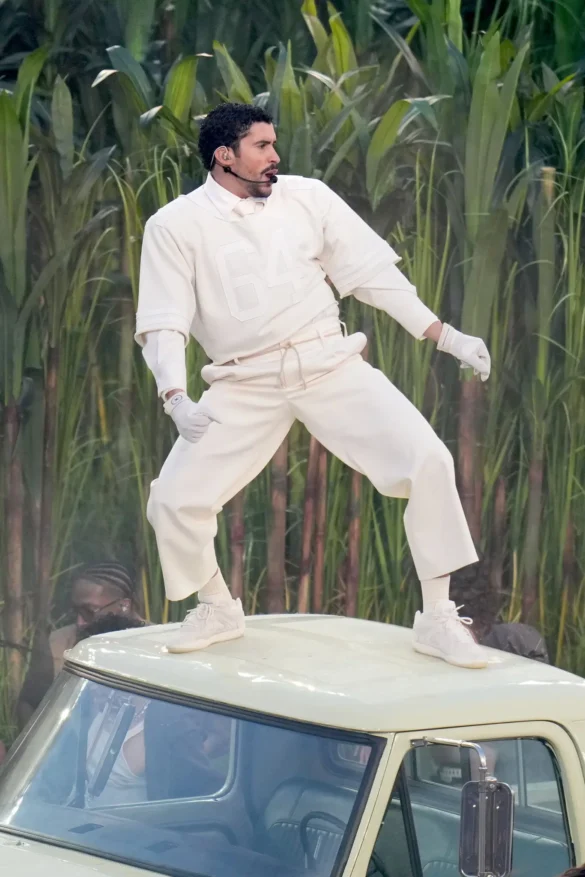
When Bad Bunny stepped onto the halftime stage last night, it was immediately clear that this would not be a conventional pop interlude designed to please everyone and offend no one. Instead, the performance unfolded like a carefully constructed manifesto, one that blended music, fashion, and symbolism into a single, coherent vision.
The show moved through distinct emotional registers. At moments it felt almost private, with close framing and restrained gestures, before opening up into large-scale choreography that filled the stadium. That tension between intimacy and spectacle has always been central to Bad Bunny’s work, and here it became the backbone of the performance. The set design and lighting avoided overt bombast, favoring atmospheres that felt urban, nocturnal, and slightly confrontational, as if the artist were insisting on bringing his own visual language into one of the most mainstream stages in the world.
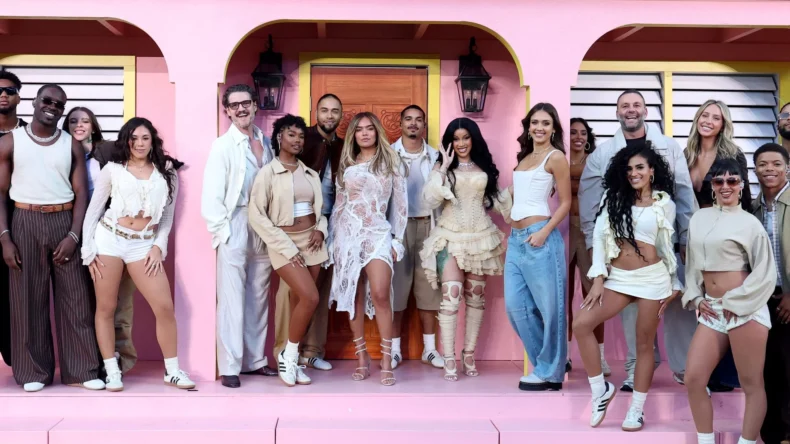
Guest appearances were integrated with unusual restraint. Rather than functioning as surprise cameos designed for viral reactions, they appeared as extensions of the narrative, reinforcing themes of community and shared cultural space. The message was subtle but persistent: this was not about individual stardom, but about presence and representation on a global platform that has historically spoken with a very specific voice.
Fashion played a crucial role in that discourse. Bad Bunny’s choice to wear a custom Zara look was far from accidental. In a context where halftime shows are often dominated by couture, archival pieces, or overt luxury statements, opting for a mass-market brand felt like a deliberate inversion. It suggested a rejection of elitism and a reminder that cultural power today does not depend on exclusivity. The look was clean, functional, and direct, mirroring the tone of the performance itself and reinforcing the idea that style, like music, can be both global and deeply personal.
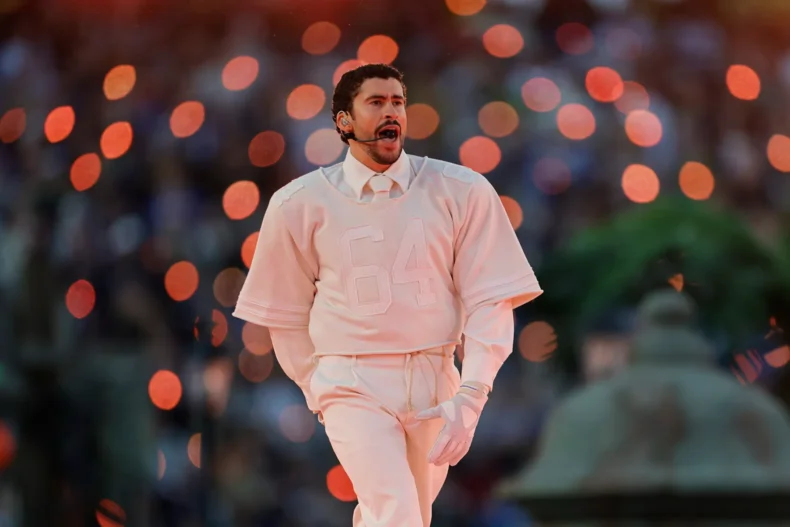
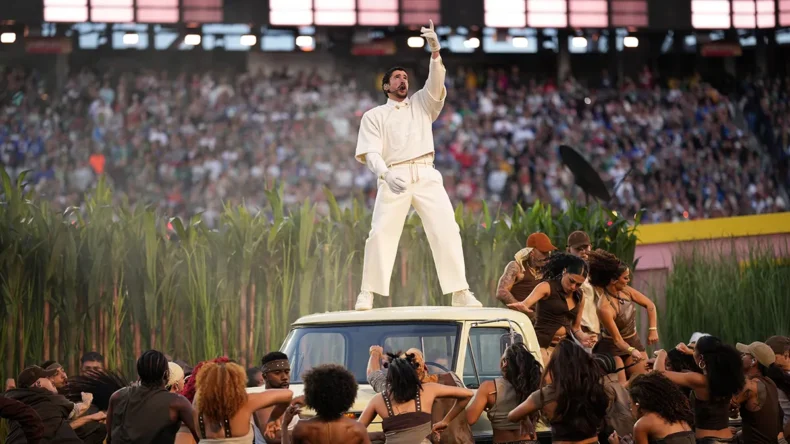
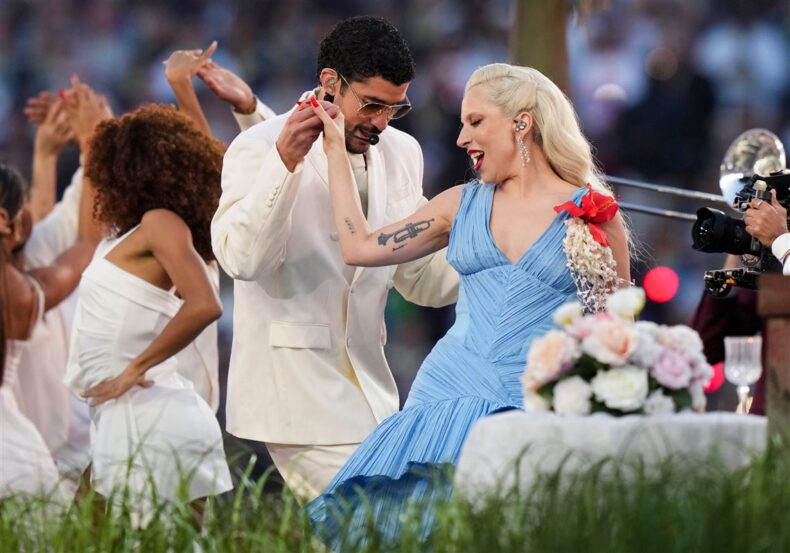
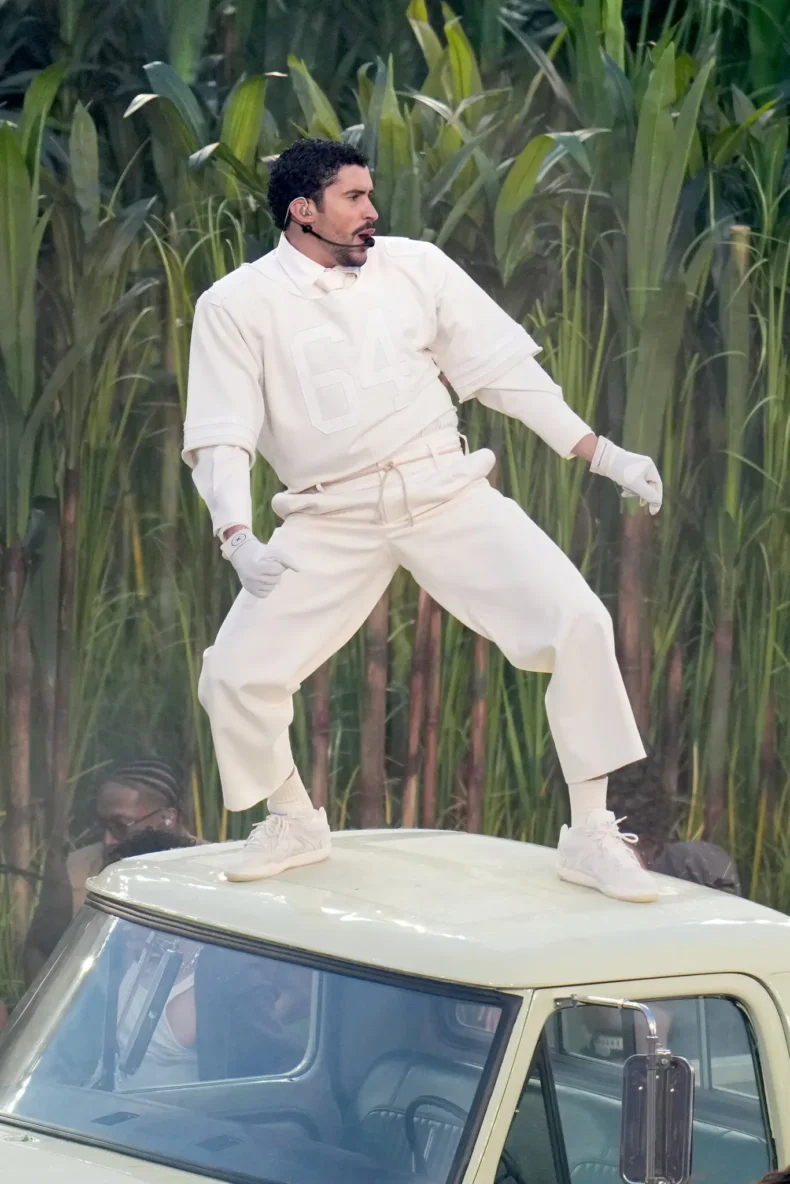
Beneath the surface, the performance carried a series of quiet signals. The choreography referenced control and release, the visuals hinted at migration, borders, and belonging, and the pacing refused the easy crescendo expected of a halftime show. Instead of building toward a single explosive finale, it lingered, repeated, and insisted, asking the audience to sit with its rhythms rather than simply consume them.
In the end, Bad Bunny delivered a halftime show that felt less like a medley of hits and more like a cultural intervention. It was confident without being triumphant, political without being didactic, and stylish without relying on spectacle for its own sake. In a space designed for maximum consensus, he chose nuance. And that, more than anything, is why the performance will be discussed long after the final note faded.